Jesus is the STAR that shows us the WAY- John 14:6

In Christmas story, we are reminded of visitors (Wise men) Matthew 2:1-2; 9 -11 from a foreign country (The East) who travelled a long journey. In order to reach their desired destination they needed assistance. They did not have any GPS, road map, or signposts elected by the city of Jerusalem. These men were not looking for a location, but a Person. In order to find Him they would need to travel many miles.

These men were searching for the Savior. But they were not sure of how to find Him. They needed direction. And God provided it. Matthew 2:11

Their desire had been that they might find the Savior, Jesus The Messiah. We read in Matthew 2:1ff that God directed them, and the desire of their hearts was fulfilled. On the very first Christmas those (The wise men) who searched for the Savior found Him. Cf -2 Corinthians 6:2
Thirty three (33) years later Jesus informed the Apostles that He would shortly be leaving them. At the Last Supper He told them He would soon be returning to Heaven. John 14:4
However, Thomas one of the Apostle’s desired destination was heaven, but he did not know how to get there- John 14:5.  Thomas was pleading with the Lord to show them the way. He needed direction. And the Lord provided it. John14:4 –6. Jesus was explaining to Thomas that the only way to Heaven was through a personal relationship with Him.
Today, two thousand years later, most people are no different than Thomas. Their desired destination is Heaven. But they are not sure of how to get there. Some are depending upon being religious, and are doing their best to lead a good life, going to church, many times a week, tilting weekly. Others believe that by being sincere, giving to charity and being honest, they may arrive in heaven some day. Many more are hoping that pilgrimages to holy places or prayers will help them make the journey to heaven. But none of these things can save us. Titus 3:5, Ephesians 2:8- 9
Some people think they are not too bad and that they are better than others. But according to the Scriptures we are ALL sinners Romans 3: 22:23. It is biblical that those who die in their sins will spend eternity suffering in Hell- Matthew 25:41

The Scriptures make is very clear that there is only ONE way by which sinners can get to Heaven, and that is through faith in Christ. John 6:14
The Lord suffered and died at Calvary as a Substitute for all who will repent of their sins and trust Him as Savior. On the cross He paid in full the penalty for the guilt of their sins- John 19:28-30. He has provided for us sinners the gift of eternal life. This is something we could never earn or merit through religious exercises or good works.
Perhaps like many others the desire of your heart is to get to Heaven. But you are not sure of how to get there. It may be that you have been travelling in the wrong direction. You may be on the wrong road. You may even be at cross-roads in your life and are not sure which way to turn. The Sign is just ahead of you that says:  "I am the way and the truth and the life. No one comes to the Father except through me.” John 14:6
Take care which direction you take. The Word of God is like a signpost. The WORD will point you in the right direction. The WORD will ‘SHOW YOU THE WAY’. The WORD will point you to Jesus. He is the ONLY way to Heaven. Why not turn to Him right now in repentance, asking Him to forgive you and trust Him to save you. DO NOT DELAY, for your journey may soon come to an end. 2 Corinthians 6:2

How Can Christ's birth Change the way you live Today- John 10:9

How can the birth of Christ change the way you live today? The truth is, knowing who Jesus is can mold your character, impact your belief system, and change your lifestyle. More so it will determine your eternal destiny.

To know who Jesus is, we can begin by reading about His birth. Seven hundred years before Christ was born, the prophet Isaiah said that a virgin will give birth to a Son, whose name will be Emmanuel; Isaiah 7:14. Jesus was born of a virgin after being conceived by the Holy Spirit and angels sang to announce His arrival. All of this makes Him very exceptional.
"By Him all things were created." So Jesus did not originate at birth, but was pre-existent with the Father in heaven, and was born into the world He Himself had created.” Colossians 1:16.
One of the best ways to understand someone is to find out what he thinks about himself. Jesus said many things about who He was — He said that He is the Son of God (
Matthew 16:16-17), that He and the Father are one (John 10:30), and that the Father is the One who sent Him (John 5:37). He also announced that He did not come to be served, but to serve and that He came to give His life as a ransom for many (Matthew 20:28). He came as a substitute payment in behalf of humanity.
Jesus also said He was the Door to Heaven (John 10:9), and in John 14:6. Jesus is exactly who He says He is. He is the Good Shepherd. He is the Bread of Life. He's the way, the truth, and the very life itself. Because, you see, in order for us to have eternal life, we must receive Jesus Christ as our personal Savior.

“Jesus is a good man, a wonderful teacher, an effective preacher, a great healer, philosopher, and humanitarian; Dr. Charles F. Stanley
There is one more aspect to investigate if we really want to know who the man Jesus Christ is. Knowing the truth of who Jesus means you are confronted with a decision; Will you believe the testimony of the Scriptures and receive Him? Or will you turn your back on truth and walk away to face a hopeless eternity? At Christmas time, when you see a manger scene, remember who's lying there. His life, His death, His words about Himself, and His resurrection. Jesus is not just a baby; He is the Son of God, sitting at the Father's right hand, with all the sovereign power of the universe, and with the offer of eternal life to anyone who believes on Him.
Work Cited:
Six Ways Satan Is Steeling Christmas- Ronnie Mitchell, 2007
Who is Jesus- Dr. Charles F. Stanley, 1986
The Bible- NIV Translation

Presenting Christ The Healer in The Hospital

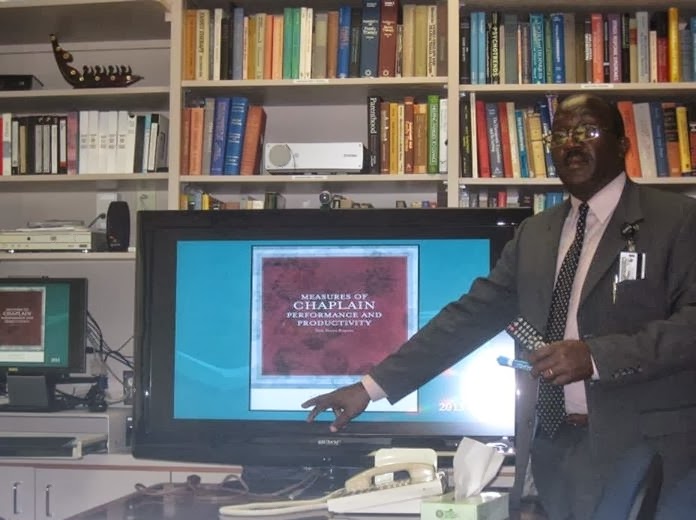
Having been a hospital chaplain for many years now, I've discovered that a hospital is a rigorous school and the many lessons there are to learn.

The most general lesson is what it's like to be weak and vulnerable to sickness, dependent upon others for small and basic needs. We do tend to take our strength, and freedoms granted -until we become incapable of doing basic things for ourselves. Illness involves loss of freedom and privacy.

Not to mention, in hospital time does drag. A few hours looks like eternity. There's the stress and fear of waiting for the results of tests. The magical names-POSITIVE results or and NEGATIVE results are doom. The imagination can run wild. And until we've been diagnosed we can't be treated. Nor can we come to terms with our medical problem until it has been defined.
It is at this period of uncertainty, I have tried to help my patients to place their life in God's hands and accept the outcome of the results. Psalms 46:10 has become my standards of helping patients who are under stress and in limbo of not knowing what the results of their test would turn out to be; “Be still, and know that I am God; I will be exalted among the nations,  I will be exalted in the earth.”
Saying prayer with patients at this moment can be very difficult. Sometimes I feel guilty about not being able to say the “right words in prayer.”
It is during these moments Romans 8:26 makes sense, “When we can't put our prayers into words the Spirit inspires our groans,”… and knows what they mean. In fact a groan can be far more eloquent than many words.
Most patients don’t cope with illness as well as is expected. At times many are afraid and confused, overwhelmed with questions about suffering, and yet most don’t have the mental strength to attempt to answer them. As a hospital chaplain, I have spent my 12 years of hospital ministry in reading and reflecting on the problem of suffering, thus when I visit my patient I have the sense not to choke the poor patient with theology when what they most need is a friend to be with him, to hold their hand and to pray with them, a friend who knows when to keep silent. All they need is a friend who has all the time for them.  See my article on “Pastoral care to the dying…”

Needless to point out in these article, that I have needed a spiritual jump start from my mentor. He once told me to stop thinking I was “stronger than Christ in Gethsemane,” If Christ could weep, Matthew 27:46, who am I to be ashamed of feeling inadequate and or feeling despair? I had to learn to accept that I was human, and that that meant being empathic, weak and vulnerable.
Like other care providers in hospital, the role of a hospital chaplain is to help patients overcome the indignities of sickness. The nurses and doctors reflect and continue to show Christ's compassion for the sick. In a chaplain like in other caregivers, patient should  met The Healer, Luke 7:1-17  The Good Physician John 5:1-9.

Where Do you Look for Life Answers

Most people think that they can find wisdom or truth from other sources than Scripture. Others think that the Bible is just a book of stories, like any other books. The Bible is truly God’s WORD, we should cherish it, study it, obey it, and fully trust it. To dismiss it is to dismiss God Himself. See 2 Timothy 3:15-17
It is amazing to see and hear how people who claim to be Christians treat the Bible. Believers need to be reading Scripture. If a believer has a question about life, he or she doesn’t need to ask Palm Readers, Fortune Tellers or Magicians. One need to look in the Bible. Because if it’s something one need to know about life, it’s in the WORD of God. Read 2 Timothy 3:15-17
You might have heard people say that the Bible is very difficult to understand. I think this is a false statement.  I also think the majority of confusion in a Christian’s life can be eliminated if one will just make a habit of reading and learning the Word of God. Joshua 1:8
If one has the habit of reading God’s WORD daily, one will know what God says about the future- Jeremiah 29:11. One will know what God says about life right now Ephesians 2:8-9. One will know because everything one needs to know is in the Bible. Isaiah. 55:10-11
It doesn’t matter who you are or what your background is, the Bible is easy to understand. Wait a minute. What if the Bible has not translation in you language and that you are not able to read in other languages? All of the Bibles we have here are translations anyway, so unless you speak Hebrew, Aramaic and Greek, you’ll have to read a translation. So you might as well pick one that’s in your language.
When you read the Bible, God gives you light to live by- Psalm 119:105. He gives you truth – John 17:17. He gives you understanding- 1 Corinthians 2:1-16. God grants His light to people who read His word, and it’s not complicated. The truth in the Bible is very simple. Often-times the most profound truths in life are inherently simple. So simple to understand that even a child can grasp the concept. Psalm 119:130
So it doesn’t matter if you have a degree in Divinity or if you’re some indigenous rural person in a village in the most remote part of the world, God’s Word is for you.
Don’t believe the lies our culture tells that Scripture is just a bunch of made up stories about the Israelites, morality, and the like. What is written in the Scripture is alive. You can read the same passage over and over again for a week, and it will mean something different to you every day. As we grow in our walk with God, the Bible broadens and deepens for us. 
And don’t believe it when people tell you that the Bible is hard to understand. Don’t think that only pastors and scholars can make sense of the Bible. Don’t read more into it than you think is there. The Bible is literal. Trying to make a figurative story out of a literal TRUTH is confusing. The bible is the TRUTH WORD of God. 2 Timothy 3:16. Don’t as well believe those who want you to believe that the Bible is a book containing the word of God.
When the Bible says God created the world Genesis 1:1, it means that He created the world. When the Bible says that God destroyed the world with a flood Genesis Chapter 7, it means that He destroyed the world with a flood. When the Bible says that Jonah survived three days and three nights in the belly of a giant fish Jonah 1:17, it means that really happened. It means David really killed Goliath Samuel Chapter 17. It means Elijah really called down fire on Mt. Caramel. 1 Kings 18:38.  It means Jesus really did miracles Mark 1:23-37.
The Bible is easy to understand. It’s just us who make things complicated. And if you’ve had trouble understanding Scripture before, try reading it again. And if you simply can’t understand it, find someone who you know does and ask for help. If one is a mature believer, he/she will be of help to you as both of you dig deeper into .
 

Why I Don't celebrate Halloween

Thursday morning October 31, was just a morning like other mornings with my usual daily routine. I usually wake up at 3 am every morning to do my morning devotions, "Morning Glory," and to plan on the days work. My devotions are not typical of what most of you may think. Morning Glory for me is more a time for meditation and reading the WORD of God in quitness of the morning. During my devotions I go to God with a open heart and mind, not only to talk to him but more so to listen to Him.
It is at this devotion time I come up with a theme for the day, ..start your day with God..." and multiple other inspirational, challenging and faith building themes for throughout the day. This day was unique in that the spirit reminded me that it is Halloween's celebration day. I was not receptive to the fact that I thought about Halloween, leave alone doing anything about it. As a result I screemed, " I DON"T CELBRATE HALLOWEEN." See Ephasians 5:7-12
There are many other Bible verses similar to this, but nothing that specifically warns against observing Halloween. Rather than providing an answer, the purpose of this article is to cause you to ask yourself questions and think about your convictions on this issue. 2 Corinthians 3:10.

As Christians, why are we here in this world? Are we here to live in a safe and protected environment, guarded against the evils in the world, or are we called to reach out into a world filled with dangers and be the light of Christ? Halloween brings people of the world to our door step. Halloween brings our neighbors out into the streets. I can think of various creative ways to seize this opportunity for developing new relationships and sharing my faith.
Is it possible that our negativity toward Halloween only alienates the people we seek to reach? Can we be in the world, but not of the world? Romans 12:2

Considering the pagan celebrations that were once prominent this time of year, it’s understandable why a God-fearing preacher, chaplain and born again christian might be cautious, however today’s traditions are certainly very different from the pagan practices that mark the now so called Halloween. As noted in one of my inspirational posting on social media, Halloween celebrations as  adopted by Pope Boniface IV, was set aside to honor Martyrs and saints, an idea that the church in Rome drived from early Celtic Culture. Today however the imagery, emphasis and symbols used deviate from the original initentions of the celebrations to hold christian church services of prayer, fasting and remember those departed.

Halloween's History
Halloween's origins date back to the ancient Celtic festival of Samhain (pronounced sow-in). The Celts, who lived 2,000 years ago in the area that is now Ireland, the United Kingdom and northern France, celebrated their new year on November 1. This day marked the end of summer and the harvest and the beginning of the dark, cold winter, a time of year that was often associated with human death. Celts believed that on the night before the new year, the boundary between the worlds of the living and the dead became blurred. On the night of October 31 they celebrated Samhain, when it was believed that the ghosts of the dead returned to earth. In addition to causing trouble and damaging crops, Celts thought that the presence of the otherworldly spirits made it easier for Celtic priests, to make predictions about the future. For a people entirely dependent on the volatile natural world, these prophecies were an important source of comfort and direction during the long, dark winter.
To commemorate the event, Druids built huge sacred bonfires, where the people gathered to burn crops and animals as sacrifices to the Celtic deities. During the celebration, the Celts wore costumes, typically consisting of animal heads and skins, and attempted to tell each other's fortunes. When the celebration was over, they re-lit their hearth fires, which they had extinguished earlier that evening, from the sacred bonfire to help protect them during the coming winter.
By 43 A.D., the Roman Empire had conquered the majority of Celtic territory. In the course of the four hundred years that they ruled the Celtic lands, two festivals of Roman origin were combined with the traditional Celtic celebration of Samhain. The first was Feralia, a day in late October when the Romans traditionally commemorated the passing of the dead. The second was a day to honor Pomona, the Roman goddess of fruit and trees. The symbol of Pomona is the apple and the incorporation of this celebration into Samhain probably explains the tradition of "bobbing" for apples that is practiced today on Halloween.
On May 13, 609 A.D., Pope Boniface IV dedicated the Pantheon in Rome in honor of all Christian martyrs, and the Catholic feast of All Martyrs Day was established in the Western church. Pope Gregory III (731–741) later expanded the festival to include all saints as well as all martyrs, and moved the observance from May 13 to November 1. By the 9th century the influence of Christianity had spread into Celtic lands, where it gradually blended with and supplanted the older Celtic rites. In 1000 A.D., the church would make November 2 All Souls' Day, a day to honor the dead.
It is widely believed today that the church was attempting to replace the Celtic festival of the dead with a related, but church-sanctioned holiday. All Souls Day was celebrated similarly to Samhain, with big bonfires, parades, and dressing up in costumes as saints, angels and devils. The All Saints Day celebration was also called All-hallows or All-hallowmas (from Middle English Alholowmesse meaning All Saints' Day) and the night before it, the traditional night of Samhain in the Celtic religion, began to be called All-hallows Eve and, eventually, Halloween.
Credits:
Encyclopedia Britannica- 1920
Wikipidia- Not a reliable source
Catholicism  in Rome, By Bishop of Myan (Main) 1977  

The difference between a pastor and a Chaplain


Pastors and chaplains are similar in many respects. Both provide counseling and spiritual ministry to those in need. However, differences exist between the two callings. Pastors typically are associated with a specific church or parish, while chaplains are generally associated with a specific employer or agency. Chaplain employer may include but not limited to; private sector, cooperate sector, and federal or local governments. The primary differences between pastors and chaplains lie in where, how and to whom they offer spiritual pastoral and counseling care.
The title of pastor is bestowed on religious leaders in protestant churches, for example, but a pastor also may be a rabbi, priest or imam. Pastors focus on ministering to those of their own faith or those who wish to convert. Chaplains may be of any faith and typically do not discuss their personal faiths with those to whom they are ministering unless they are asked. Chaplains don’t proselyte
Although pastors may visit members of their congregation at home, in the hospital or at a nursing home, most activities are church-based. Chaplains perform their duties beyond church walls. Hospital chaplains comfort patients in their rooms or minister to the families of patients. Military chaplains may hold services in chapels while stateside or in tents when deployed to a combat zone. Prison chaplains counsel inmates and staff. Chaplains also act as a liaison between the prison and external churches. See my article on; "A pastoral reminder to spiritual leaders." 

Comparing a pastor and a chaplain involves comparing a religious leader and a spiritual leader. Religious leaders deal with the doctrines, rituals, beliefs and morality specific to their religion. Chaplains respect the right of all people to follow any religion or no religion at all. Rather than focus on religious morality, chaplains deal with the question of ethical behavior. Chaplains may counsel forgiveness as being in the person’s best interests rather than because it is a religious tenet.

Although most countries have constitutions that provides for the freedom of religion, the same also orders the separation of church and state. Chaplains do not violate that separation if the purpose of the chaplaincy is secular, such as crisis intervention, chaplain remains neutral on the subject of specific religions and chaplaincy is open to members of all religious beliefs.
Chaplains are more likely to deal with those in immediate crisis or who have experienced a recent trauma. Many chaplains are trained in crime scene and trauma scene protocols so they can venture into settings that might be off-limits to pastors. Because pastors are paid by their churches, they must satisfy the demands of their congregations; chaplains are employees of a company or agency and must satisfy the demands of their employers, which may include maintaining a low public profile or maintaining a politically correct appearance, sic.
Credits:
Jeffrey Joyner - Demand Media
Association of Professional Chaplains-APC
Texas TMC Chaplain’s Symposium -2011

From Chaplain’s Desk- A pastoral reminder to Spiritual Leaders-

Most hospitals have well-trained chaplains on staff for spiritual care of the patients, family and staff. These chaplains can be valuable allies when spiritual leaders in any community visit sick parishioners in a hospital setting. Over the years in the hospital, I have had pastors call to inquire about parishioners in the hospital and request that I visit them on their behalf.

In hospitals, Chaplains are there to assist and not interfere; therefore, it is important to contact the chaplain during the time a parishioner from your church, Temple, Mosque, is hospitalized. A person's faith and faith community can play a vital role in the recovery process. The Chaplain’s goal is to harness the power of both for healing.

Chaplains recognize that collaboration with community clergy is something important and desirable. They are there as colleagues, not competitors. The hospital chaplain is in a position to visit sick patient during times pastors and other parishioners are unable to be there. In addition, as part of the interdisciplinary team caring for the patients, the chaplain can become an advocate for addressing patient’s needs and also a liaison to both the family and the community clergy. Personally in my capacity as a hospital chaplain I double as a patient relations officer and patient advocate.

Hospital chaplains regularly join clergy in prayer for the sick parishioners, and strive to assist them as best as they can. Visiting clergy may have questions or concerns which a chaplain is often able to address and sometimes rapidly resolve. Chaplains are there to serve, and are always glad to have community clergy contact them and draw upon their expertise for the benefit of sick patient parishioners.

The chaplain serves the hospital staff as well. Everyone from physician to the person cleaning the floors can benefit from chaplains kind words, a smile, or a willingness to really listen. Like pastors in the church, rabbis in a Temple, Imams in Mosques, chaplain will allow God to work in and through them for the benefit of the patient. You may be pleasantly surprised at how many people are touched, blessed, and helped through a simple chaplain’s smile. You will be surprised how staff may confine to the hospital chaplain for spiritual guidance. My advice here is that pastors, Imams, rabbi, and parishioners among other spiritual leaders should encourage those working in hospitals to utilize the services of the chaplain.

As part of their ethical guideline, chaplains are aware that protecting the privacy of patients and the confidential information related to them has always been important.  Chaplains know that patients have the right to release or prohibit the release of information about them. Chaplains respect patient’s decision. Chaplain will not lease patient information on the phone even when the caller is claiming to be the clergy to the patient.

Once again I want to remind all spiritual leaders to encourage their parishioners who are patients in the hospital or employees of the hospital to utilize the services provided by the chaplain.